For a long time, what defined innovation in architecture was visible at first glance: an unprecedented facade, a texture that felt new to the touch, a material no one had ever seen on a wall before. Earlier this month, however, one of the field’s most respected awards went to something else entirely: not a building, not a surface, but a way of managing, procuring, and building public housing. The distinction matters because it reveals where authority in architecture is shifting: from the object you can see to the system that sustains it.
An Award for the Process, Not the Facade
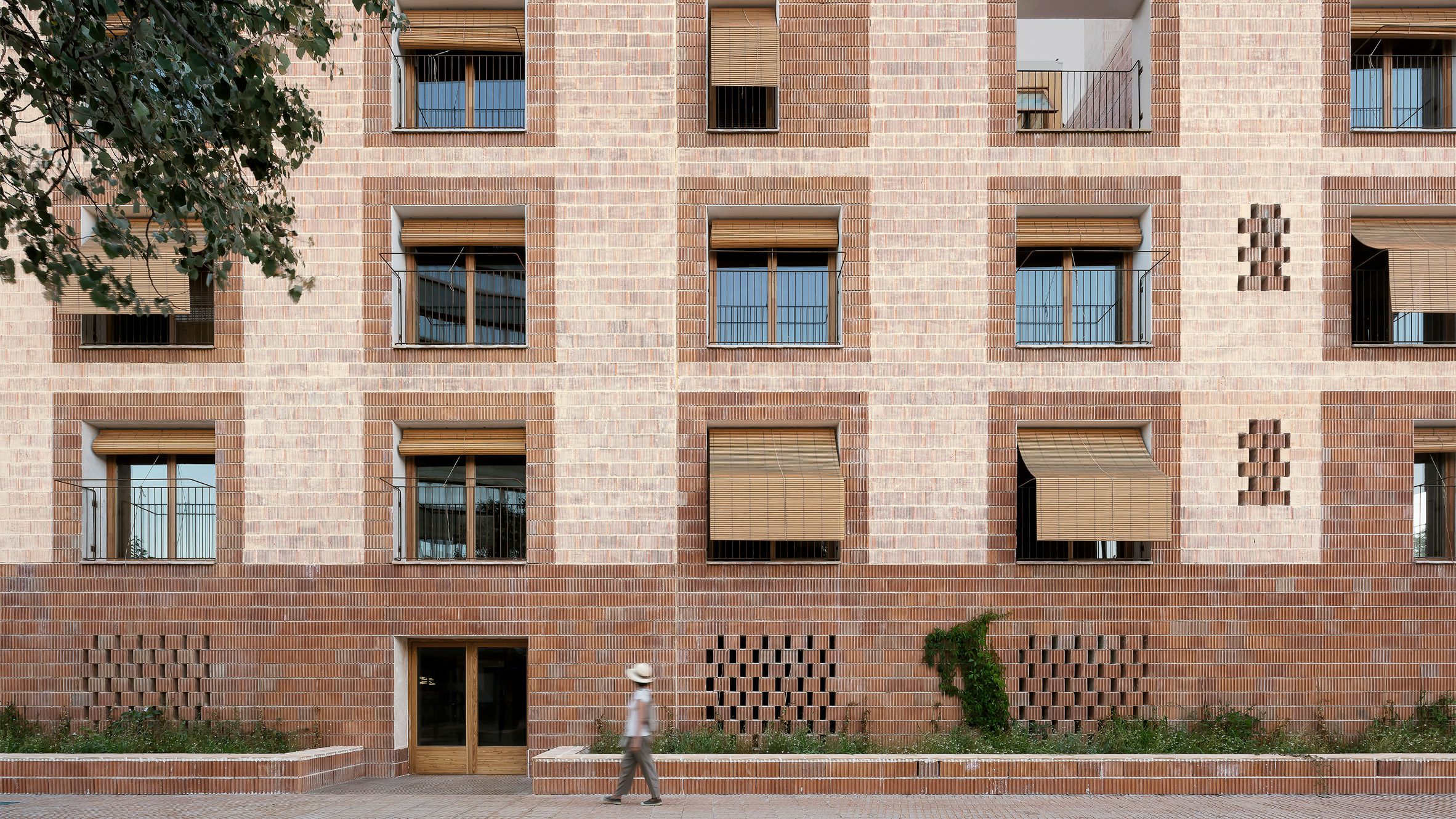
This week, an international award dedicated to the social and environmental impact of architecture announced the winner of its latest edition: not a standalone building, but a public social housing management model developed in a Mediterranean archipelago between 2019 and 2023. The region’s housing authority overhauled the way affordable housing is commissioned, designed, and built, prioritizing local materials, circular construction principles, and responses to the local climate. The result was a way to rapidly expand the public housing supply without sacrificing architectural, environmental, or social quality, in a region facing a severe shortage of social rental housing.
The jury was clear in explaining its choice: the model’s value didn’t lie in a specific building, material, or formal language, but in how it ties together public policy, architectural experimentation, environmental responsibility, local production capacity, and the dignified delivery of housing as parts of a single system. That’s notable because architecture awards usually go to a single work: a form, a facade, a photogenic gesture. Here, the recognition went to a sequence of procurement, contracting, and management decisions, the kind of work that usually stays invisible behind the finished building.
“Increasingly, authority doesn’t lie with whoever designs the most beautiful object, but with whoever designs the system that makes that object possible at scale.”
None of these three episodes would have made headlines on its own a decade ago. Together, they point in the same direction: the center of gravity of innovation in architecture and design is shifting from the finished object to the system that produces it, whether that system is a housing policy, an industrial supply chain, or a repurposed waste stream. Anyone building authority in the field from now on will need to be fluent in both.
The material’s appeal isn’t just aesthetic: according to the manufacturer, each kilogram of the product stores more than twice the carbon dioxide held in a kilogram of wood, and that carbon can stay locked in for centuries because the material doesn’t decompose and is recyclable. Though still limited to dry indoor settings such as hospitality and food service, it is already being supplied to projects under construction, and the company behind it says it is targeting broader structural applications in the future.

What connects this launch to the housing award is the same logic: the most talked-about material of the week doesn’t stand out for its color or texture as such, but for the waste stream it repurposes. The innovation happens upstream, in choosing which waste becomes raw material, not downstream, in the final finish.
When Packaging Becomes a Wall
Along the same lines, it’s worth recalling a university study published a few months ago that took a similar path using a different waste stream: researchers confined rammed earth inside permanent cardboard tubes, eliminating the need for cement in the mix. The idea tackles two problems at once, the growing volume of cardboard discarded by e-commerce and the carbon footprint of conventional cement, and turns both into a material with roughly a quarter of the embodied carbon of concrete. The prototypes, still small-scale for now, show strength comparable to that of cement-stabilized rammed earth.

Once again, the material itself matters less than the thinking behind it: looking at an existing waste stream, whether from the forest or from delivery logistics, and asking what that stream could become before it becomes trash.
What Changes for Designers and Specifiers
For those still building their frame of reference, whether in architecture school or in their first years of practice, one thing is worth keeping in mind: a material’s spec sheet is no longer just about color, texture, and mechanical performance. It’s starting to include where that material came from and what it displaced in the supply chain. This isn’t just a tedious environmental box to check in a project specification. Increasingly, it’s the very value argument that backs a design choice in front of a client or a jury.
For those who have been specifying for longer, the challenge is different: convincing someone that a procurement or process decision matters as much as an aesthetic one takes a different vocabulary than usual. It’s not enough to say a material is sustainable. You have to show where it comes from, what it kept out of the waste stream, and why that supply chain matters as much as the surface it produces.
“Increasingly, specifying a material means choosing an entire supply chain, not just a surface.”
None of these three episodes would have made headlines on its own a decade ago. Together, they point in the same direction: the center of gravity of innovation in architecture and design is shifting from the finished object to the system that produces it, whether that system is a housing policy, an industrial supply chain, or a repurposed waste stream. Anyone building authority in the field from now on will need to be fluent in both the object and the system.
References
[1] PEACOCK, Amy. “Balearic Islands’ model for social housing wins Obel Award 2026.” Dezeen, Sept. 1, 2026. Available at: https://www.dezeen.com/2026/09/01/obel-award-2026-balearic-islands-social-housing/.
[2] BARKER, Nat. “Finnish company launches ‘world’s most carbon-storing building material’.” Dezeen, Sept. 4, 2026. Available at: https://www.dezeen.com/2026/09/04/mo6-carbon-storing-material-elementic/.
[3] BRANDON, Elissaveta M. “RMIT researchers reimagine rammed earth by encasing it in cardboard tubes.” Dezeen, Oct. 15, 2025. Available at: https://www.dezeen.com/2025/10/15/rmit-rammed-earth-cardboard-tubes/.